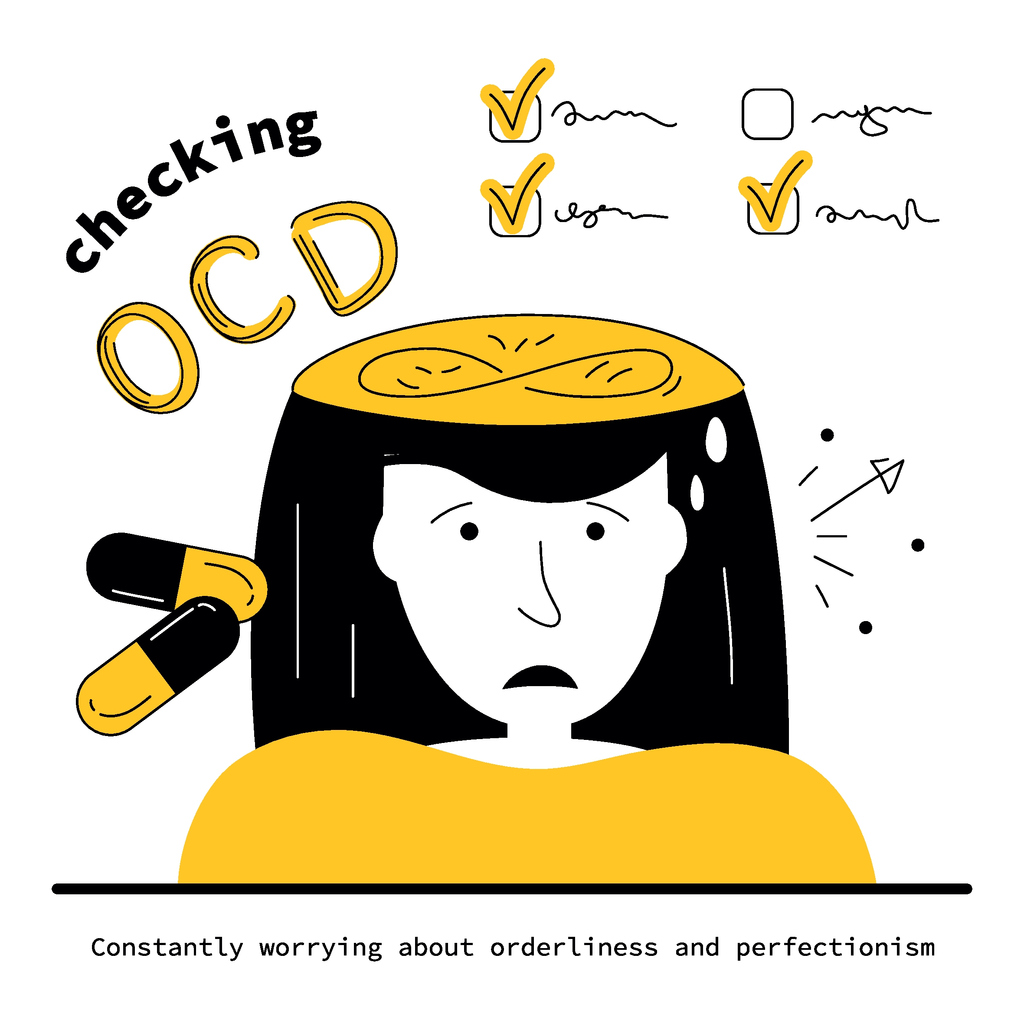
Many people with OCD experience times when things seem to be getting worse instead of improving. At times, the change happens right after the diagnosis. Sometimes it comes from nowhere. Sometimes life brings something stressful to them, and immediately, they cannot get those thoughts out of their heads.
This is particularly for those who are in that confusion nowadays. One that says, "Why is this getting worse? What is happening to me? Am I doing something wrong?"
The answer is no. You are not doing anything wrong. However, there are real factors that lead the OCDs to become worse. So, before learning about it thoroughly, keep in mind that your concern is genuine. The journey is indeed long but treatable. Don’t feel guilty or have self-doubt about managing part is a delusion.
What leads to OCD getting worse?
There is not just one explanation. Usually, it is a combination of several things happening at one time. Some of the most common ones:
Starting to recognize it much more:
When people come to learn what OCD is, they start to see things that they never noticed before. Out of the blue, all the little quirks, every repetitive thought, and all the anxious moments become examined and tested.
The brain gets activated and asks, "Was that OCD? Is this OCD? What about that?" This constant focus on the problem can make the condition mutate from one day to another. The fact is that a person has started paying a lot of attention to it. This is difficult. Yet, the beginning is in sight as well.
Stress builds up quietly:
When we go through stress (for example, a big change, loss, new environment, health scare), the disorder often returns to the analogy of stress as being the fuel of OCD. Typically, during a stressful situation, the brain starts to behave as if it were in a storm of panic, and feels like it has to gain control by doing more compulsions.
This issue is sometimes related to someone who is going through exams, a work change, moving to a new place, or family problems. These times make sense, after all. The brain is fearful. The OCD is doing what it can to help, but it is causing more harm than good.
Awareness after diagnosis:
This seems quite strange, of course, but it indeed is one of the causes. Actually, the professional diagnosis is a major emotional moment. For some people, it brings a certain degree of relief from the worst situations, while other people with the same problem could experience their brain in overdrive (aka unfortunate).
Basically, the brain sees the word "OCD" and suddenly decides there might be lots of OCD symptoms. This process is like being told not to think of a pink elephant, which is the point when everyone starts thinking of nothing but a pink elephant.
An expert put it this way: a "normal" person can listen to a breakdown about OCD and feel unconcerned. However, a person with OCD will absorb that information, and their brain will wire itself to it. That reflex, as heartbreaking as it is, is again the diagnosis of the condition.
Certain thinking patterns feed OCD:
OCD becomes more intense because of detrimental types of thinking that rule. These are not negative traits but the patterns the brain has adopted, and they can be deleted.
Let me present some of the most common ones:
- Blaming oneself for everything: The point is that the person could be responsible for anything bad that happens if they did not step in and take preventive steps. This means that the person has to repeat a lot of very tiresome rituals just to feel "safe."
- Correlating thoughts to actions: Believing that wishing for bad thoughts is just as bad as bad acting. This brings about a huge dose of guilt on those thoughts, which most of them usually find and let go of.
- Controlling the whole thought process: Trying rather hard to make certain thoughts not pop up. The irony is that the more one attempts not to think of something, the more like a boomerang that thought becomes.
- Anticipating the worst every time: It seems the pointing end is the real issue. This makes common situations feel like emergencies.
- Demanding absolute certainty: Not wanting to hear any "perhaps." The need for surety always. OCD loves doubts since it provides the mind with an issue that it can muse over without stopping.
- Perfectionism: The assessment that even a tiny mistake leads to a disaster. A case in point is that a person can get stuck just because of that.
Child psychiatrists often see cases of children with OCD, who have intrusive thoughts and urges to do certain things, even if they try to ignore them. These ways of thinking are not personal. They are the way OCD has taught the brain to respond. But with the right support, they can be changed.
The compulsions themselves make it worse:
This is an issue that many people who are dealing with OCD do not really understand: the actions that are intended to bring relief to one's anxious condition are actually those that make the OCD stronger.
Each time a compulsion is carried out to reduce anxiety, the brain is informed, "That thought was scary, and so we had to react." Hence, if the same thought appears, the person just gets anxious, sometimes worse.
Typically, it is a circuit. First, the obsession interferes. Then, the panic rises. The compulsion gives momentary relief. After that, the cycle restarts. Also, compulsions are not to be perceived as a weakness. Actually, they are a response to a threat to life. At the same time, they are the fuel of OCD.
The "Am I faking it?" feeling is part of OCD:
When OCD gets worse after a diagnosis, or suddenly gets better for a while, the mind accuses: “It’s fake! It’s not real. This is not OCD.” The reality is that obsessions and compulsions are not in a strictly neutral mood. They rather flash in waves as it could be tides according to stress, life events, sleep, and many other factors. Yes, they were right to say that the repeated interrogative relationship with the OCD diagnosis itself already makes it a potential OCD. Otherwise, people who do not have OCD do not ruminate on such issues for hours.
Other cause factors that worsen OCD:
- Variations in hormones may sometimes contribute to the increased intensity of OCD symptoms, especially in women during the postpartum period, menstruation, or menopause.
- Certain deficiencies of vitamins such as Vitamin D and B12 cause mental health symptoms to become more severe.
- Sleep and mental health are strongly related. When one cannot manage intrusive thoughts efficiently, getting sleep becomes impossible. On the other hand, a tired mind has a tough time differentiating thoughts quietly. Therefore, the mind cannot function to its fullest.
- ADHD treatments, such as ADHD stimulant medication, sometimes worsen symptoms.
Delay in getting the right help acts as a kind of catalyst:
OCD left on its own, unmanaged for a long time, tends to get worse. The patterns become more ingrained. The compulsions become more complicated. The frequency with which the person finds themselves safe becomes indeed very narrow.
Nevertheless, this is not the fault of anyone, as most people do not have a clear idea of what OCD really is. Many are diagnosed inaccurately. Many go through life being told they are either overly anxious or tend to overthink things. Having the proper support from an expert who really understands OCD makes a big positive difference.
What really works
OCD is one of the most well-studied mental illnesses in the world. There are means to manage the symptoms and also treatments that make people live a life that is fear-free and happier.
Talking with a specialist who has expertise in OCD
Not every mental health professional has extensive knowledge about OCD. Finding an expert, such as an OCD psychiatrist, who holds a medical degree with extensive understanding of OCD makes a difference. They understand the brain wiring difference that makes them obsessive-compulsive towards certain things, as well as evidence-based skills to address it. They understand the person's particular case and, together with them, develop a plan.
OCD treatment plan includes medication (that helps control the ocean of obsessions to the degree that therapy may be possible), talk therapy, and coping skills. Now, you have great access to connect with an expert online. Psychiatrists at GABA Telepsychiatry provide personalized online OCD treatment in multiple states.
The Takeaway
Getting OCD worse is not always a sign of a setback. It is not a message that the end is near and there is no one to help them. Instead, it means there is a need for a change either in the aid or in their idea of the thoughts, or simply not providing enough rest and care for themselves.
The positive part is that the brain can adapt (because of neuroplasticity). It is not only being hopeful but also being backed by the evidence of numerous years of research. The people from the advanced stage of OCD are able to manage well. People who were convinced that they would never experience feeling normal again end up finding a way to a life that is really significant.